
Reviews affect discovery
Recent, relevant reviews and thoughtful responses give travelers and discovery services more current information about the hotel.

Hotel Reputation and Review Management
Guest reviews shape how travelers and online platforms understand a hotel. When included in the engagement, HTB monitors the agreed review sources, organizes new reviews, and reports recurring themes so the hotel can decide what needs attention.
The big picture
Travelers often read reviews while comparing hotels and rates. Search, booking, and AI services may also surface review information when they describe a property.
Recent, relevant reviews and thoughtful responses give travelers and discovery services more current information about the hotel.
Guests often consider the rate and the recent guest experience together. Clear, current review information helps them make that comparison with better context.
Every review is the voice of a guest. Read together, they show what to keep doing, what to correct on the website, and what belongs with the hotel team. Become guest obsessed, and the reviews become a plan.
What it means for the hotel: guest feedback becomes an organized signal for marketing follow-up and for the hotel team.
What is covered
Five parts connect the agreed review work to practical marketing and reporting follow-up. The detail for each part opens below.
New reviews from agreed sources are organized with available status and follow-up details.
Guest experience areas and the words guests use, tracked over time, so a problem or a strength shows before it moves the rating.
Reputation health at a glance: snapshot, your targets, key trends, areas to improve, and the action list under them.
Photos and keywords from each review identified, and responses drafted, approved and posted as agreed.
You choose your comp set. HTB tracks their ratings, volume and themes beside yours and reports the movement.
What it means for the hotel: fresh reviews and approved responses help guests see a more current picture of the property. HTB organizes the marketing follow-up; the hotel remains responsible for the guest experience and operational response.
HTB gives every property the same working system, scaled to what's in scope.
HTB records reviews from the agreed sources and flags items that need attention. Timing depends on source availability, connected access, and the service schedule.
The tracking view brings together reviews from the sources included in the engagement, with available rating, source, date, text, and workflow status. HTB documents exceptions and follow-up needs.
Reviews are sorted into experience areas such as rooms, service, food, location and value, and tracked over time. A slow drift in one area is visible before it shows in the rating or the bookings.
The words guests use most, rising and falling month by month. You see a problem or a strength before it becomes a pattern in the rating, and the words feed your responses and your website copy.
Your ratings, volume and themes set against the comp set you choose. You know where you sit on reputation before you set a rate.
Options to invite recent guests to review, connected to the tracking center, so new reviews keep arriving in the places that count. Permission-cleared guest testimonials are published on your own website, next to your rooms and rates.
The dashboard, the daily handling of each review, and the moves HTB recommends most.
The dashboard opens on one screen. A health snapshot shows overall rating, review count, response rate and how each moved since last month. Your targets, set with HTB, sit against actuals. Key trends by source and the areas pulling the rating down are ranked, with the reviews behind each one. Under the panels sits the action list: what HTB recommends this month, who owns it, and what has been done.
Guest photos are collected alongside the text, and HTB identifies the ones that need a response or a website change. Keyword discovery shows what the guest actually praised or complained about, so the response reads as a real reply and not a template. Responses are drafted, approved and posted from the tracking center. HTB and the hotel agree who drafts, who approves and who posts before the work starts.
What guests praise most is what your website, your Google listing and your responses should say first. HTB identifies the strengths and recommends where they belong. The small things guests mention with delight are worth repeating on purpose and naming on the site.
Where your comp set is praised and you are not, and the reverse, is your positioning in the guest's own words. A complaint that repeats is an operational item for the hotel team, and a public response until it is fixed. HTB separates the two and reports both.
Your target guests are comparing you against your comp set. You should too. You choose the properties that compete for your guest. HTB tracks ratings, review volume, response activity and recurring themes for each one beside yours, updated as reviews post, and reports who is climbing and who is slipping. The rate decision stays with the hotel, made with the comp set in full view.
The hotel keeps its rate, inventory and every operational decision. HTB identifies, tracks, alerts, reports and recommends. Where a review points to something in the building, HTB names it, and the hotel team decides. Review site accounts, Google accounts and the data stay the hotel's.
An illustrative view
One working view can bring reviews from every source, the volume over time, the status of each reply, and the themes to act on into one place.

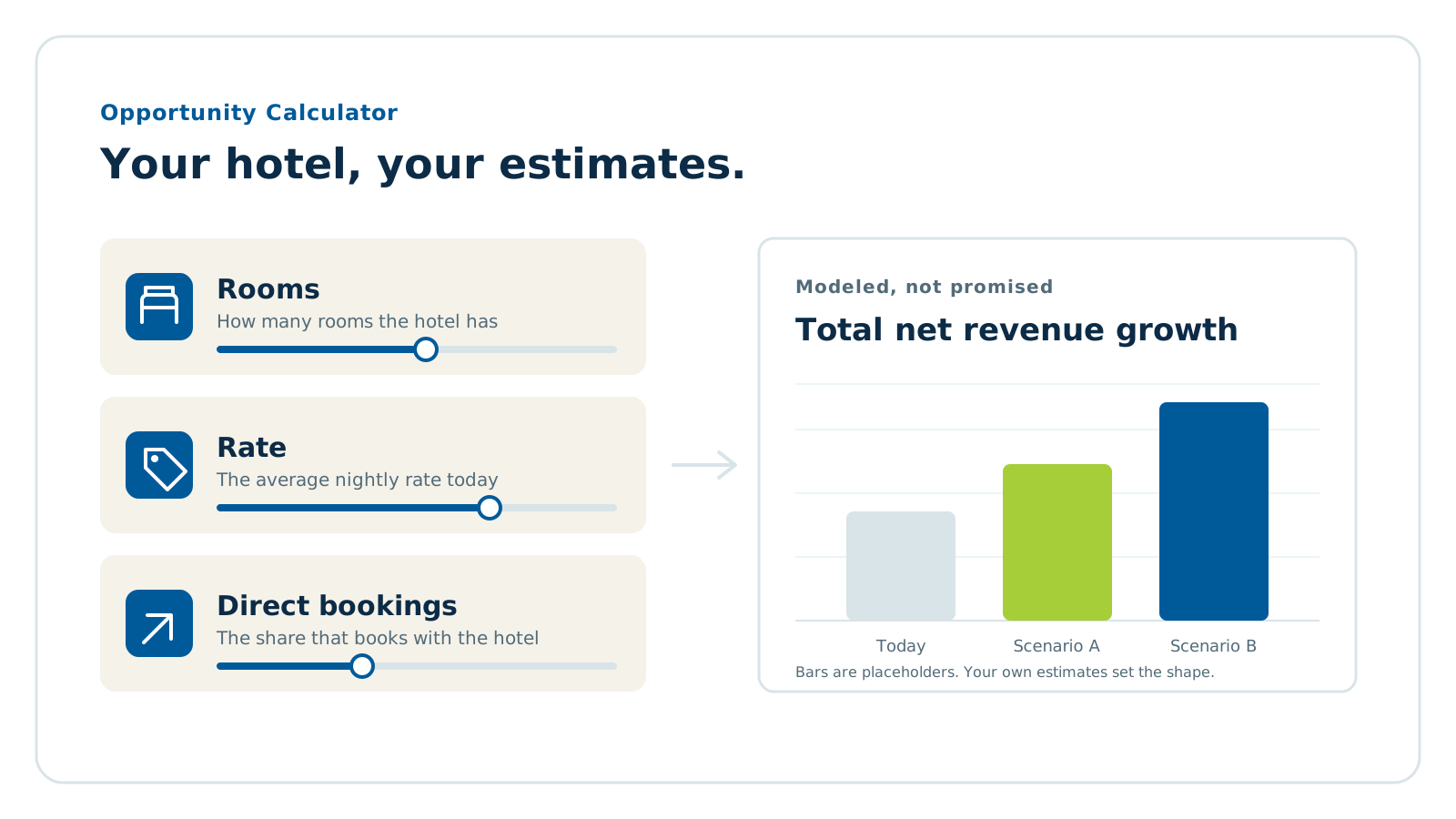
Opportunity Calculator
Enter your rooms, your rate, and your direct booking share to see a modeled view of net revenue, not a promise.
Open the Opportunity CalculatorQuestions hoteliers ask
Straight answers on sources, alert timing, comp sets, and what the hotel keeps.
Daily review alerts, a tracking center for reviews from agreed sources, guest experience and keyword trend tracking, a reputation dashboard, response support, and comp set tracking against properties the hotel chooses.
As part of hotel online reputation management, HTB tracks major guest review sources, including leading OTAs. The hotel agrees which sources are included before work begins, and sources can be added when access, platform availability, and scope allow.
Daily alerts are the norm, but timing depends on the review source, connected access, and the agreed service schedule. HTB explains the expected timing for each included source.
Yes. You choose the properties your guest is comparing you with. HTB tracks their ratings, review volume, and key trending insights beside yours, and reports the movement.
No. HTB reports where you sit on reputation against your comp set and recommends the marketing move. Rate, inventory, and every pricing decision stay with the hotel.
HTB connects review request options to the tracking center, so recent guests are invited to review in the places that count. Permission-cleared testimonials can also be published on your own website.
Both. HTB handles the day-to-day tracking center, alerts, and response workflow for individual reviews, while the broader strategy work - trend tracking, the dashboard, and comp set analysis - turns that daily activity into a recurring marketing priority.
HTB separates the two: a repeating complaint is treated as an operational item for the hotel team to address, and as a public response until it’s fixed. HTB names the issue and reports it; the hotel team owns the operational fix.
The core system - alerts, tracking, dashboard, keyword trends, and comp set analysis - is the same for every property, then scoped to the specific review sources, comp set, and response workflow each hotel agrees to.
Reputation and Review Management
Request a free hotel website review, or ask HTB about setting up your reputation dashboard and comp set.